
By: Medically reviewed by Cynthia Cobb, DNP, APRN, WHNP-BC, FAANP — Written by Rachel Nall, MSN, CRNA
Source: Medical news today
Website: https://www.medicalnewstoday.com/articles/321917#how-does-botox-work

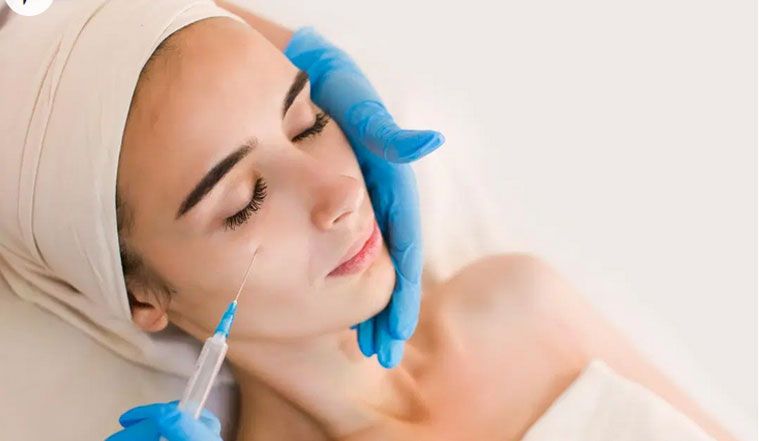
Botox injections may eliminate the appearance of lines and wrinkles around the eyes and mouth. Can they also reduce dark circles and bags under the eyes?

Botulinum toxin, commonly called Botox, is a medication that weakens the muscle contractions that cause wrinkles to appear.

Botox temporarily reduces wrinkles:

between the brows
in the forehead
at the sides of the eyes
around the mouth

However, the United States Food and Drug Administration (FDA) has not approved the use of Botox under the eyes for cosmetic purposes. Little research has looked into its effectiveness or side effects.

In this article, learn what we currently know about using Botox under the eyes, including possible side effects and alternatives to this procedure.
How does Botox work?
Botox injections are used to lessen the appearance of wrinkles.

Vials of Botox contain three main ingredients: botulinum toxin type A, human albumin, and sodium chloride. The active ingredient, which has the greatest effect, is botulinum toxin A.

When injected into muscles, Botox blocks the nerve impulses that cause a particular muscle to contract. The muscle cannot move, and this reduces the appearance of wrinkles.

Botox can only reduce wrinkles in areas of the face that move. Doctors will usually use it on the frown lines between the eyebrows, called glabellar lines, as well as on lines in the forehead, and crow’s feet at the sides of the eyes.

Botox is not a permanent solution to wrinkles. In 3–6 months, it will stop blocking the nerve impulses, and the muscles will begin to contract. A person will need further injections to maintain results.Toronto Botox Clinic3

Botox has also emerged as a treatment for a number of medical conditions, from migraines to an overactive bladder.
How effective is Botox under the eyes?

Injecting Botox to treat bags or dark circles under the eyes is an off-label use in the U.S., and the FDA have not approved it.

For this reason, researchers have conducted few studies about this use, and doctors are unsure how effective it may be.

One studyTrusted Source from 2003 sought to determine whether Botox injections under and around the eyes could reduce the appearance of wrinkles in these areas. Nineteen female participants received injections. Those who had them in the lower eyelids and crow’s feet area were more likely to report positive results than those who only received injections in their lower eyelids.

These results suggest that Botox injections can make the lower eyelid appear fuller and plumper, helping to reduce wrinkles and bagginess.

The researchers also measured the effects of varying amounts of Botox in the lower eyelid. Patients experienced the strongest results when receiving 8 units of Botox, but they also had the most intense side effects.

By: Medically reviewed by Cynthia Cobb, DNP, APRN, WHNP-BC, FAANP — Written by Jennifer Berry
Source: Medical news today
Website: https://www.medicalnewstoday.com/articles/320510

Botox and dermal fillers are cosmetic treatments given through injections, usually in a doctor’s office. They are minimally invasive, meaning they do not involve surgery. That is where their similarities end, however.

Botox and dermal filler treatments are popular, accounting for more than 9 million procedures in 2015, according to the American Society of Plastic Surgeons (ASPS).

Botox contains purified bacteria that freeze muscles. In doing so, Botox can help minimize the appearance of lines and wrinkles caused by facial expressions.

Dermal fillers contain ingredients that add fullness to areas that have thinned due to aging. This thinning is common in the cheeks, lips, and around the mouth.

People should be aware of the costs and risks of treatments and have realistic expectations of what they can do.
What is Botox?
Botox may help to correct dynamic wrinkles, such as crow’s feet around the eyes and horizontal lines on the forehead.

Botox is a purified form of the botulinum toxin that is obtained from bacteria. Though it is deadly in larger amounts, the tiny, regulated amount of Botox given to correct wrinkles has been used safely for decades.

Botox works by blocking nerve signals in the muscles where it is injected. When those nerve signals are interrupted, the affected muscle is temporarily paralyzed or frozen. Without movement of these selected muscles in the face, certain wrinkles may be softened, reduced, or even removed.

Botox and other treatments made with botulinum toxin are sometimes called neuromodulators or neurotoxins.

Treatments made with botulinum toxin are sold under the brand names Botox Cosmetic, Dysport, and Xeomin.
What can Botox correct?

Botox only works on wrinkles that are caused by muscle movement. These are known as dynamic wrinkles, and are often called “expression lines.”

The most common dynamic wrinkles that Botox can treat are lines on the upper face, such as the “11” between the brows, horizontal lines on the forehead, and crow’s feet around the eyes. These lines are caused by smiling, frowning, squinting, and other facial expressions.

Botox will not work on fine lines and wrinkles caused by sagging or loss of plumpness in the face. These are known as static wrinkles. Static wrinkles include lines in the cheeks, neck, and jowl areas.

Botox is not a permanent treatment. Repeated treatments are necessary for continued wrinkle-reducing effects. Most people find that the muscle-relaxing effect of Botox lasts for 3 to 4 months.
Botox side effects and considerations

The ASPS considers Botox to be safe, and 6.7 million procedures were performed in 2015. As Botox wears off over time, most side effects are only temporary.Toronto Botox Clinic2

Possible side effects of Botox include:

drooping of the eyelid or brow if injected near the eye
weakness or paralysis of nearby muscles
hives, rashes, or itching
pain, bleeding, bruising, swelling, numbness, or redness
headache
dry mouth
flu-like symptoms
nausea
trouble swallowing, speaking, or breathing
gallbladder problems
blurry vision or vision problems

The treatment may also fail to work due to antibodies that fight the toxin. This happens in less than 1 percent of peopleTrusted Source who have repeated Botox treatments, however.

The ASPS advise people not to rub or massage the area of the injection after having Botox treatment. This could spread the toxin to surrounding skin, causing muscle drooping and other problems.

By: Medically reviewed by Dena Westphalen, Pharm.D. — Written by Hannah Nichols
Source: Medical news today
Website: https://www.medicalnewstoday.com/articles/158647#how-does-it-work

Botox is a drug that weakens or paralyzes muscle. In small doses, it can reduce skin wrinkles and help treat some medical conditions.

Botox is a protein made from Botulinum toxin, which the bacterium Clostridium botulinum produces. This is the same toxin that causes botulism.

Botox is a toxin, but when doctors use it correctly and in small doses, it can have benefits. It has both cosmetic and medical uses.

As a cosmetic treatment, Botox injections can reduce the appearance of skin wrinkles.

Also, the Food and Drug Administration (FDA) have approved it as a treatment for various health issues, including eyelid spasms, excessive sweating, some bladder disorders, and migraine.Toronto Botox Clinic

In this article, we explain how Botox works and explore its uses, side effects, and other risks.
What is Botox?
Credit Image: Leren Lu/Getty Images

Botox derives from C. botulinum bacteria, which are present in many natural settings, including soil, lakes, forests, and the intestinal tracts of mammals and fish.

Naturally occurring C. botulinum bacteria and spores are generally harmless. Problems only arise when the spores transform and the cell population increases. At a certain point, the bacteria begin producing Botulinum toxin, the deadly neurotoxin responsible for botulism.

Botulinum toxin is extremely dangerous. Some scientists have estimated that 1 gramTrusted Source of a crystalline form of the toxin could kill 1 million people and that a couple of kilograms could kill every human on the planet.

However, when Botox is appropriately used in a therapeutic context, it is safe and has few side effects, the American Osteopathic College of Dermatology report.

Manufacturers make Botox injections with very small doses of Botulinum toxin. The drug can temporarily paralyze muscles, which can benefit people with various muscle or nerve disorders.

Commercial preparations of Botulinum toxin include:

onabotulinumtoxin A (Botox)
abobotulinumtoxin A (Dysport)
incobotulinumtoxin A (Xeomin)
rimabotulinumtoxin B (Myobloc)
prabotulinumtoxin A (Jeuveau)

People casually use the term “Botox” to describe all of these products, though Botox is a registered trademark that one company owns.
How does it work?

Botox is a neurotoxin. These substances target the nervous system, disrupting the nerve signaling processes that stimulate muscle contraction. This is how the drug causes temporary muscle paralysis.

In order for any muscle to contract, the nerves release a chemical messenger called acetylcholine at the junction where nerve endings meet muscle cells. Acetylcholine attaches to receptors on the muscle cells and causes the cells to contract, or shorten.

Botox injections prevent the release of acetylcholine, which stops the muscle cells from contracting. In this way, the toxin helps the muscles to become less stiff.

No Internet Connection